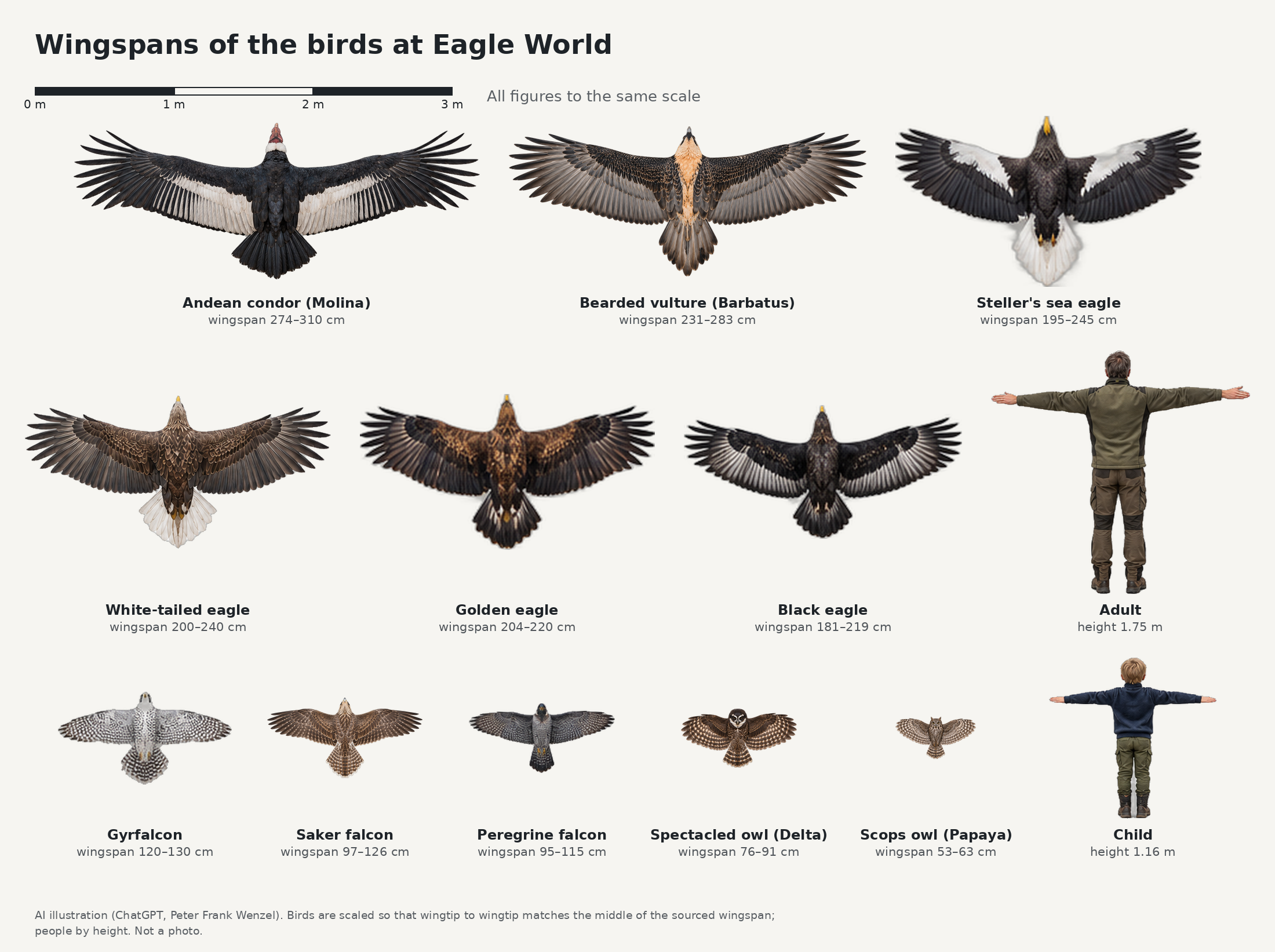
When Molina spreads her wings over the flight demonstration area, a murmur goes through the audience. And Papaya? With a twinkle in the eye: many people first think it's a pine cone sitting on the glove. Both are birds of prey, both fly – but their wings tell two completely different stories. Here is the story of wingspan: what the numbers are, what the shape means, and what researchers have discovered in recent years.
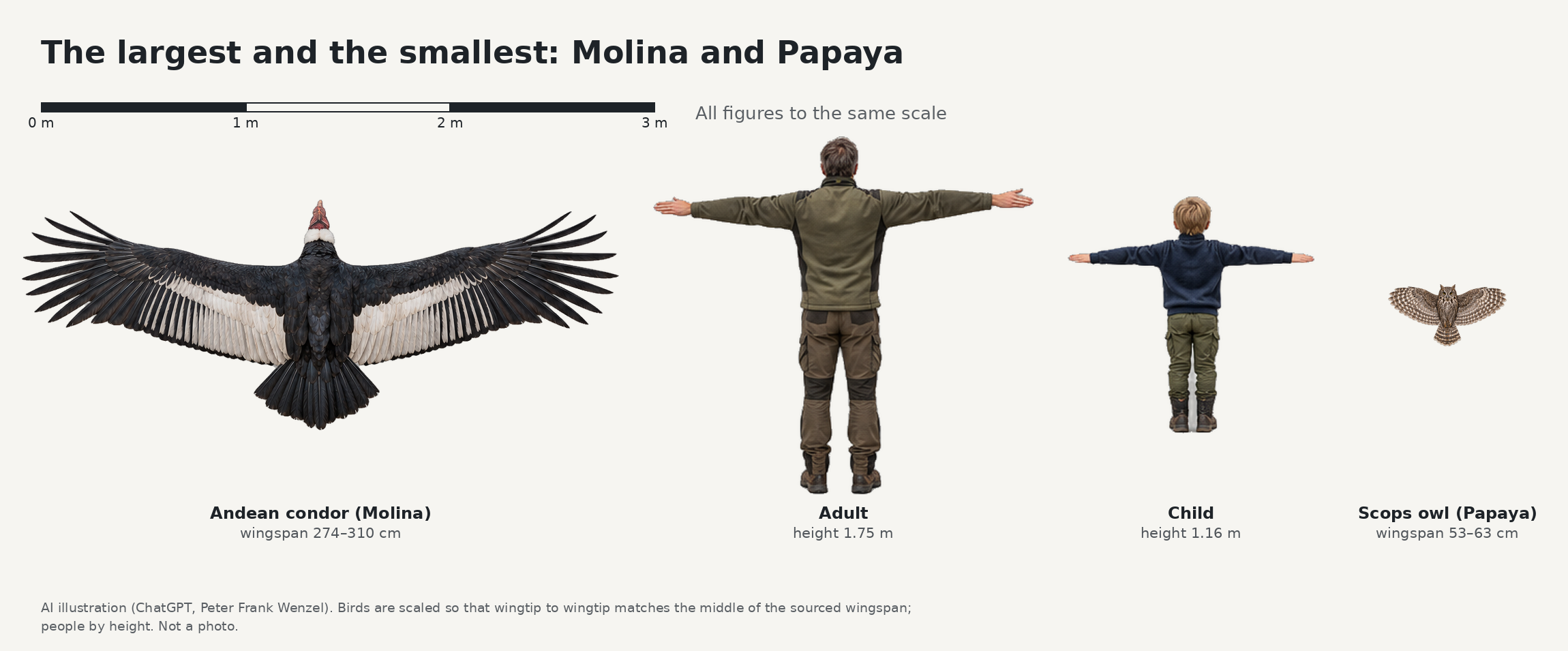
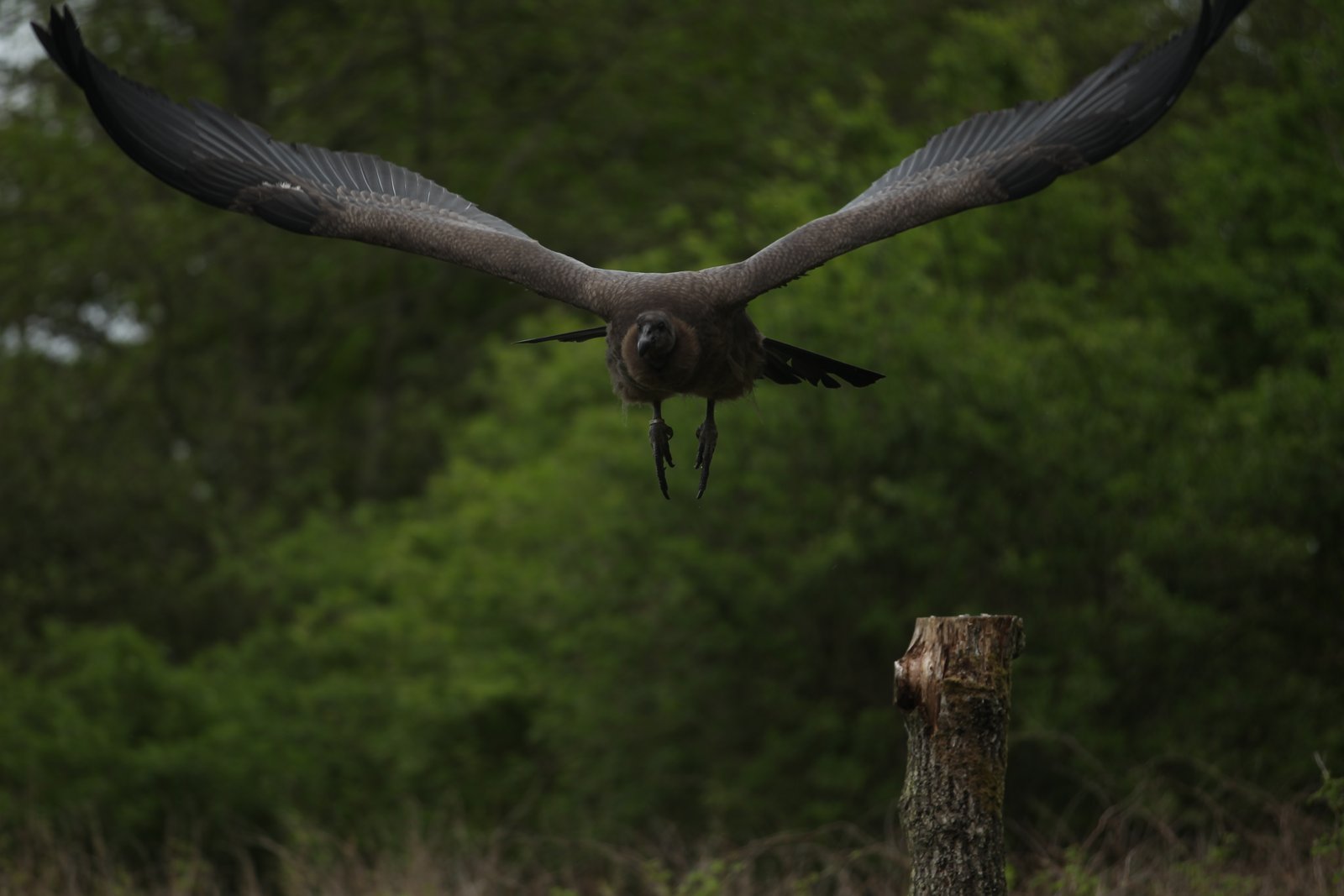
The largest is Molina, our Andean condor. The Andean condor has a wingspan of 274–310 cm (Birds of Bolivia), and The Peregrine Fund calls it the bird of prey with the longest wingspan in the world (Peregrine Fund). The smallest is Papaya, our Eurasian scops owl: 19–20 cm long, 60–120 g and 53–63 cm in wingspan (MME / BirdLife Hungary).
Taking the middle of the ranges, Molina's wingspan is about five times Papaya's. In weight the difference is even bigger: a condor weighs 17–33 lb, about 7.7–15 kg (Peregrine Fund) – more than a hundred times as much as a scops owl.
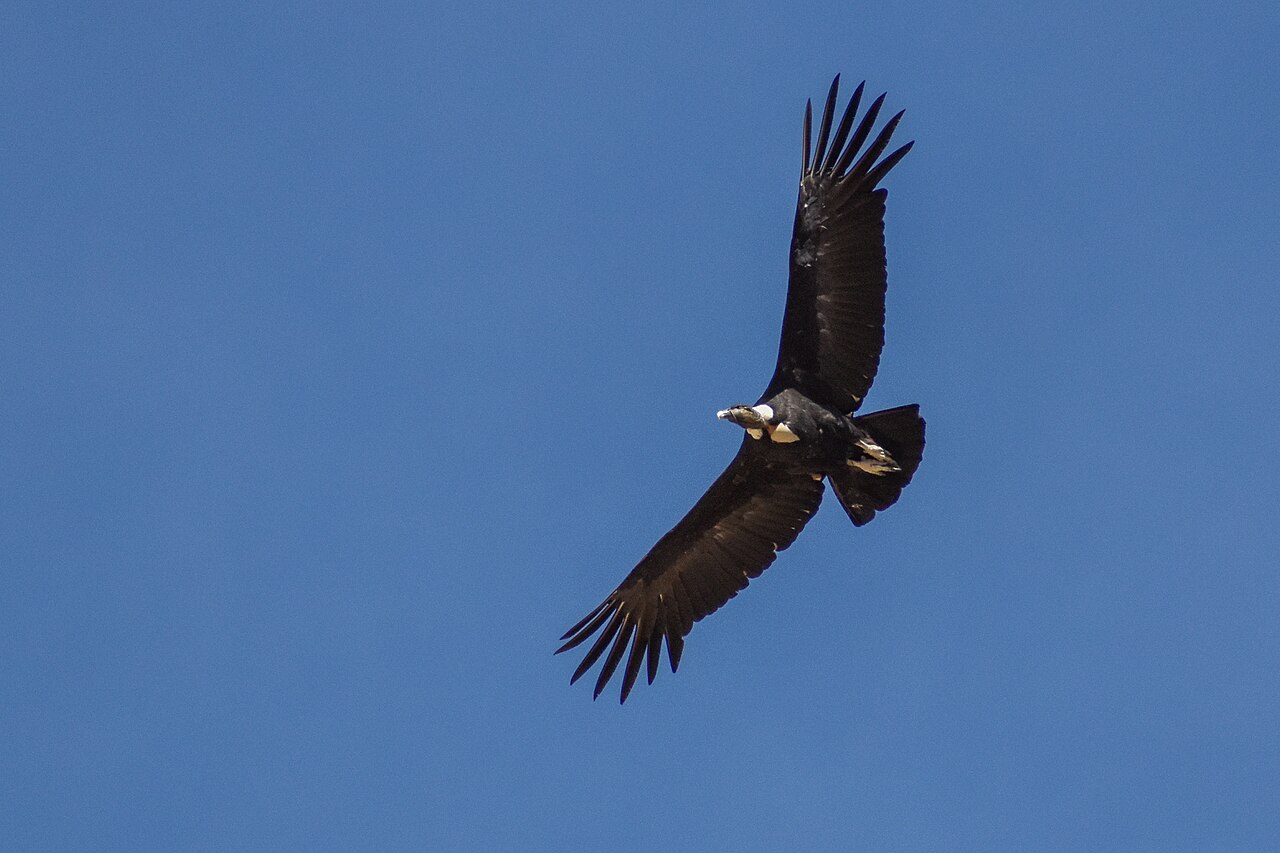
The huge wingspan is built for soaring. Long, broad wings with spread "fingers" (the primary feathers) catch updrafts from mountainsides and thermals. The condor is a scavenger; it doesn't hunt, but it has to patrol large areas cheaply. See the research section on how rarely it actually flaps.
231–283 cm and 4.5–7.1 kg (Peregrine Fund). The wings are narrower and more pointed than the condor's, and the tail is long and wedge-shaped – a silhouette you can recognise from far away. It glides along mountainsides looking for bones.
195–245 cm, approx. 95 cm long; males 4.9–6 kg and females 6.8–9 kg (BC Rare Bird Records, after Brazil 2009 and Meyburg et al. 2020). The heaviest eagle at Eagle World. Broad "plank" wings and a wedge-shaped tail – good for carrying heavy loads such as fish.
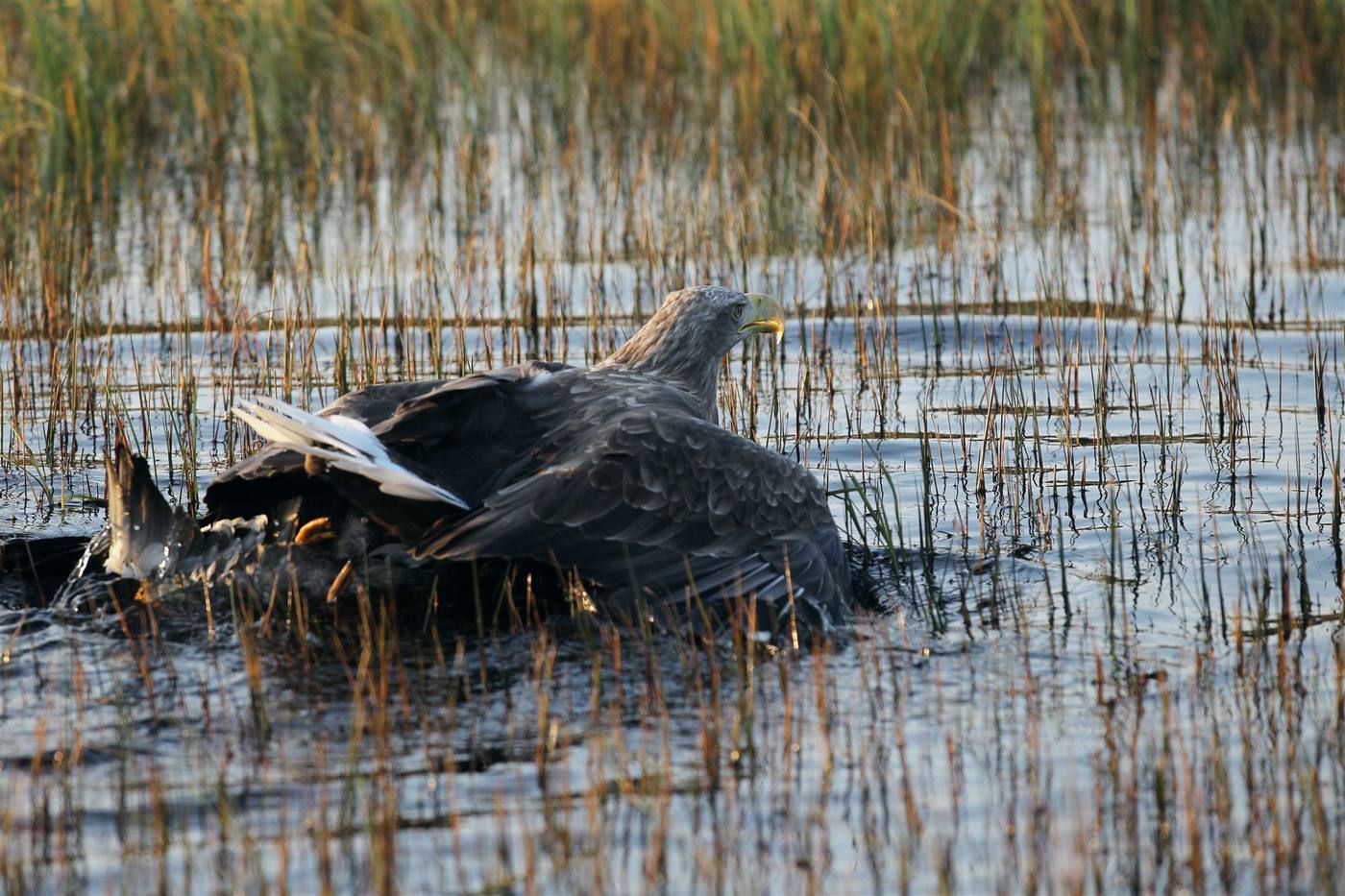
193–244 cm and 3–7 kg (Peregrine Fund; RSPB gives 200–240 cm). Denmark's largest bird of prey. Broad, rectangular wings for long glides over water and coast.
204–220 cm (RSPB) and 3–6 kg (Peregrine Fund). Slightly slimmer wings than the white-tailed eagle and a longer tail – it can both soar high and make fast stoops after prey.
181–219 cm and 3–4.15 kg (Peregrine Fund). The wings are narrow near the body and broad further out – a characteristic "paddle shape". A cliff specialist that uses updrafts along rock faces.
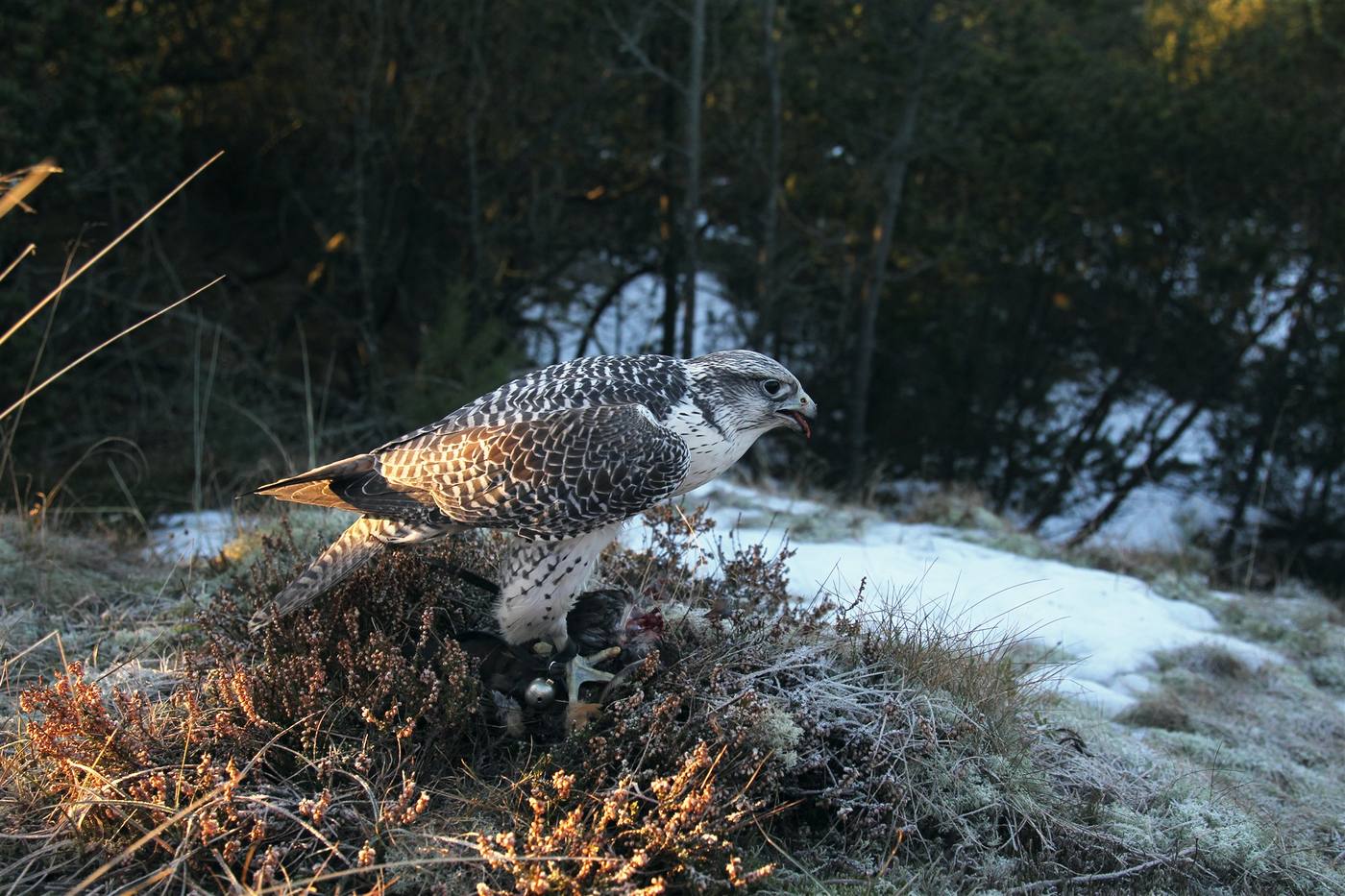
120–130 cm and 0.9–2 kg; the world's largest falcon (Peregrine Fund). Falcons have pointed wings without "fingers" – built for speed and powerful wingbeats rather than soaring.
97–126 cm and 730–1300 g (Peregrine Fund). Typically hunts low over open country for rodents and birds.
RSPB gives 95–115 cm; Peregrine Fund 78–122 cm and 0.4–1.5 kg (Peregrine Fund). Famous for its stoop – Peregrine Fund writes that it has been measured at over 200 mph (approx. 320 km/h). In the dive it tucks its wings in to the body.
76–91 cm; males 453–680 g, females 680–906 g (Animal Diversity Web). Owls have broad, rounded wings with low wing loading, which gives slow, controlled flight between the trees.
53–63 cm and 60–120 g (MME). Our smallest. Papaya is a little insect hunter with the red eyes and ear tufts.
| Species (our bird) | Wingspan | Weight | Length | Source |
|---|---|---|---|---|
| Andean condor (Molina) | 274–310 cm | approx. 7.7–15 kg (17–33 lb) | 100–122 cm | Birds of Bolivia; Peregrine Fund |
| Bearded vulture (Barbatus) | 231–283 cm | 4.5–7.1 kg | 94–125 cm | Peregrine Fund |
| Steller's sea eagle | 195–245 cm | ♂4.9–6 / ♀6.8–9 kg | approx. 95 cm | BC Rare Bird Records |
| White-tailed eagle | 200–240 cm (RSPB) | 3–7 kg | 70–90 cm | RSPB; Peregrine Fund |
| Golden eagle | 204–220 cm | 3–6 kg | 75–88 cm | RSPB; Peregrine Fund |
| Black eagle | 181–219 cm | 3–4.15 kg | 80–90 cm | Peregrine Fund |
| Gyrfalcon | 120–130 cm | 0.9–2 kg | 50–63 cm | Peregrine Fund |
| Saker falcon | 97–126 cm | 730–1300 g | 45–57 cm | Peregrine Fund |
| Peregrine falcon | 95–115 cm (RSPB) | 0.4–1.5 kg | 39–50 cm | RSPB; Peregrine Fund |
| Spectacled owl (Delta) | 76–91 cm | 453–906 g | 43–46 cm | Animal Diversity Web |
| Eurasian scops owl (Papaya) | 53–63 cm | 60–120 g | 19–20 cm | MME / BirdLife Hungary |
The ranges apply to the species in general, not to our own birds. In birds of prey, females are typically larger than males.
Wing loading is the weight spread over the wing area. Low loading = the bird can fly slowly and soar on weak updrafts. Aspect ratio (span² / wing area) describes how long and narrow the wing is. A concrete, measured example: a PNAS study compared Microraptor with the frigatebird. Microraptor had an aspect ratio of 6.7 and a wing loading of 70.6 N/m²; the frigatebird 25.2 and 45.4 N/m² (Chatterjee & Templin 2007). So the frigatebird is an extreme soaring bird with long, narrow wings.
For our own species we haven't found measured wing areas in sources of the same quality, so we give no numbers – only the pattern: vultures and eagles have broad wings with "fingers" that make them good at using thermals; falcons have pointed wings for speed; owls have large, broad wings for silent, slow flight.
A measure researchers use a lot is the hand-wing index (how long the "hand" is relative to the wing). In a study of more than 10,000 bird species, Sheard et al. (2020) showed that the index is linked to how far species disperse – and to migration and habitat (Nature Communications). The measurements are freely available in the AVONET database (Tobias et al. 2022, Ecology Letters).
Williams et al. fitted flight loggers to wild Andean condors in Patagonia. The birds spent only about 1% of their flight time flapping; more than three quarters of the flapping happened at take-off – and one condor flew for more than five hours and about 172 km without flapping (PNAS 2020). The huge wingspan is a way of saving energy.
Mills et al. simulated peregrine attacks and found that a high-speed dive gives a better chance of catching agile prey, because the large aerodynamic forces in the dive increase manoeuvrability (PLOS Computational Biology 2018).
Harvey et al. showed that by folding and extending their wings, birds can switch between stable and unstable flight – stable for gliding, unstable for quick manoeuvres (Nature 2022).
The hand-wing index study (Sheard et al. 2020, see above) showed that birds in regions with strong seasonal changes, and migratory birds in general, have longer, more pointed wings.
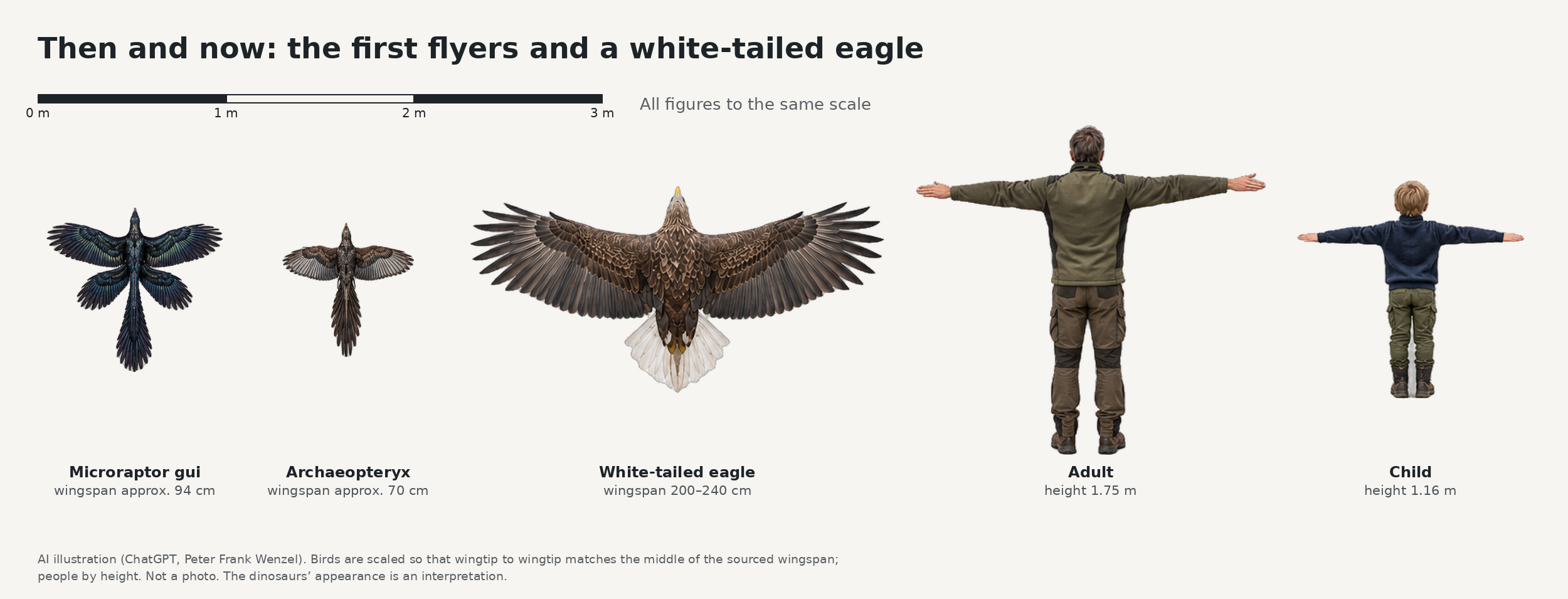
Birds are dinosaurs – descendants of small, feathered predatory dinosaurs (theropods). The pterosaurs, which could grow enormous, were not dinosaurs but a sister group. We have left them out here.
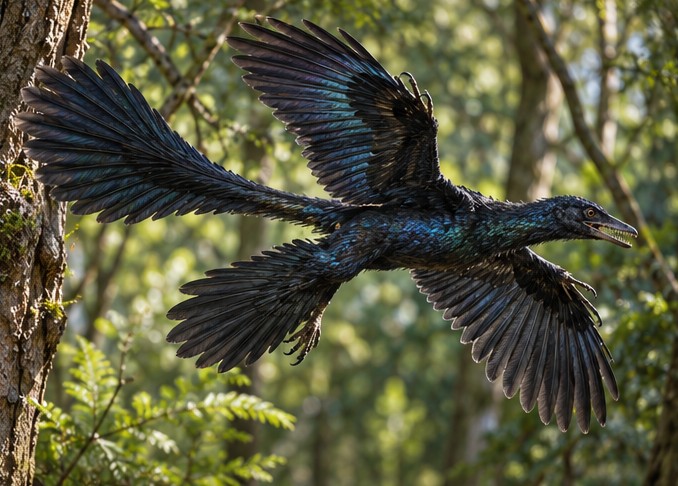
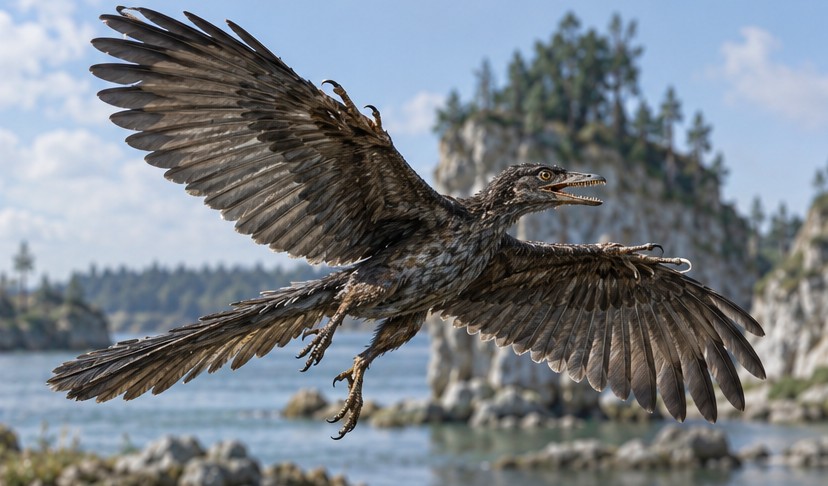
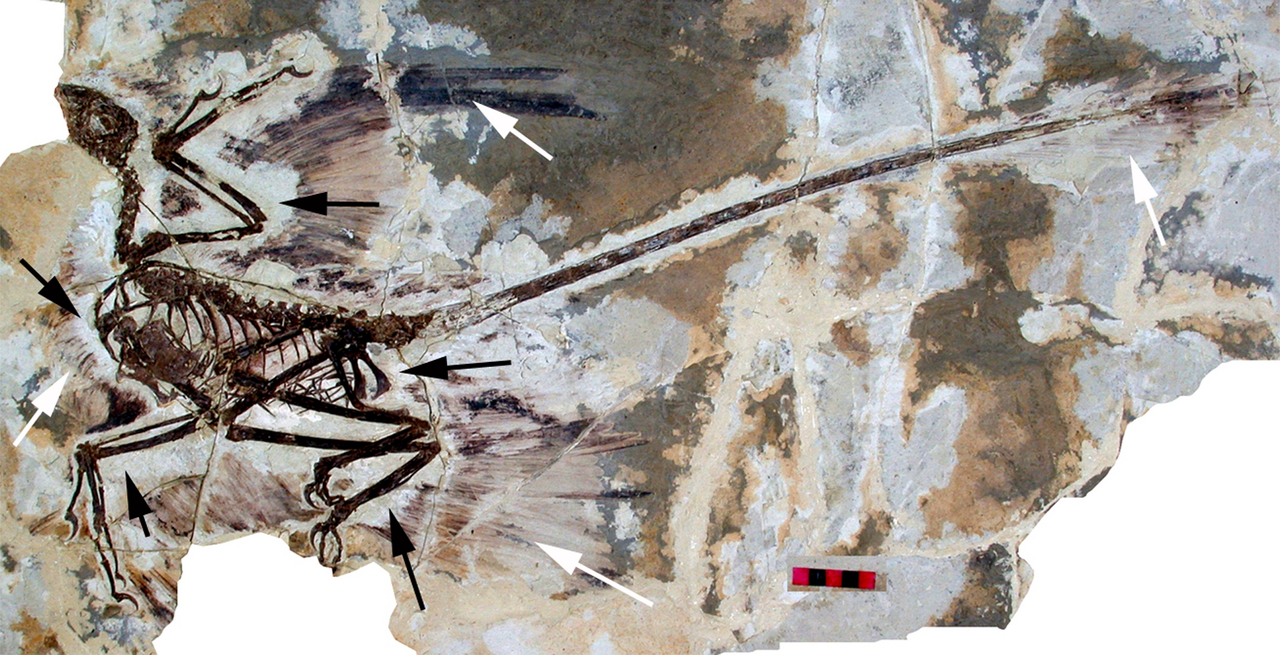
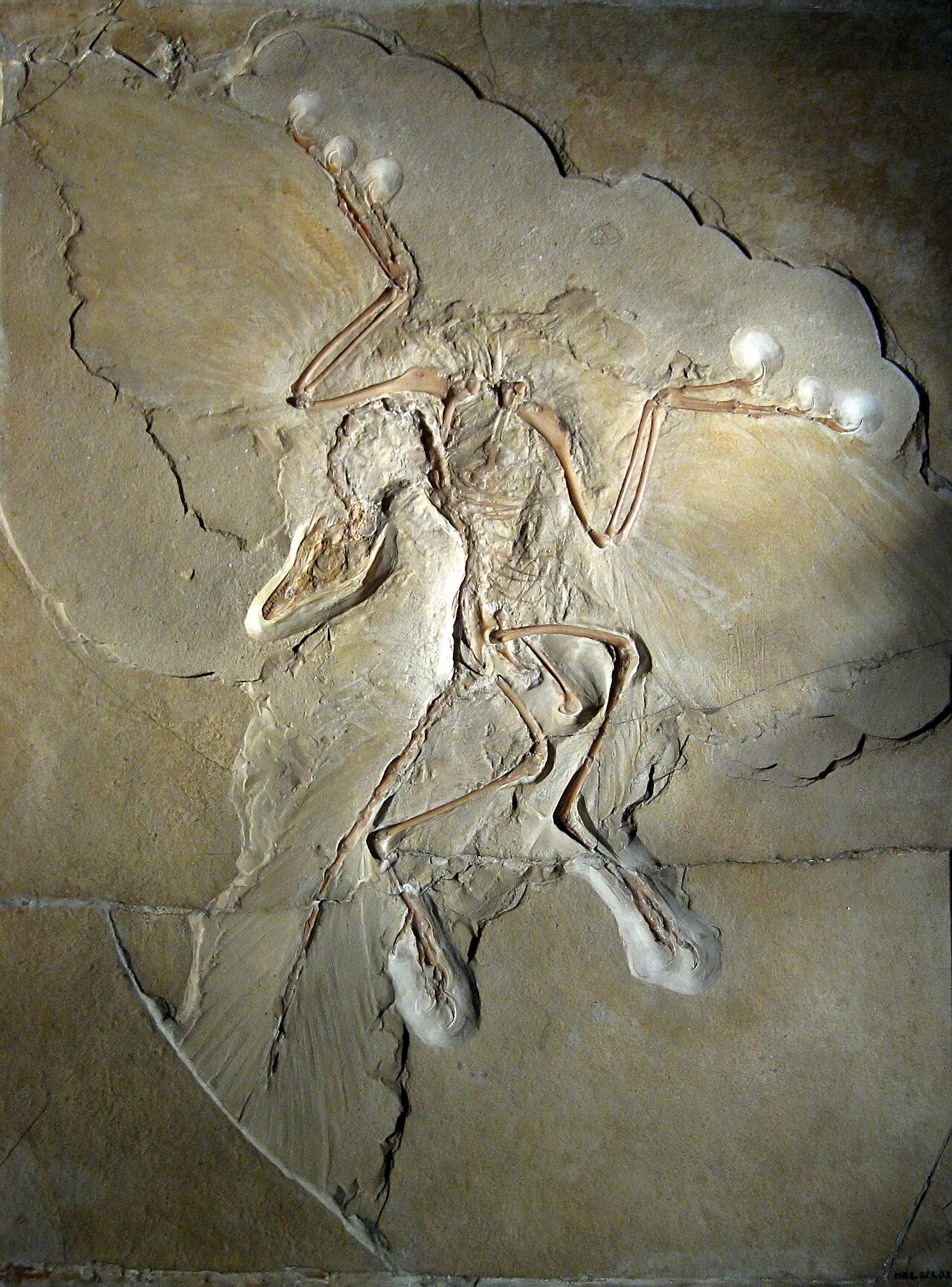
Microraptor (approx. 120 million years ago, China) had long flight feathers on both arms and legs – four "wings" (Xu et al. 2003, Nature). The holotype had a calculated wingspan of 0.94 m and an estimated weight of 0.95 kg (Chatterjee & Templin 2007). Archaeopteryx (approx. 150 million years ago, Germany) had a wingspan of approx. 70 cm (overview level, Wikipedia). The bones in its wings suggest that it could fly actively with wingbeats (Voeten et al. 2018). A 2020 analysis showed that several of the closest relatives of birds were near the threshold for powered flight, but only a few crossed it (Pei et al. 2020, Current Biology).
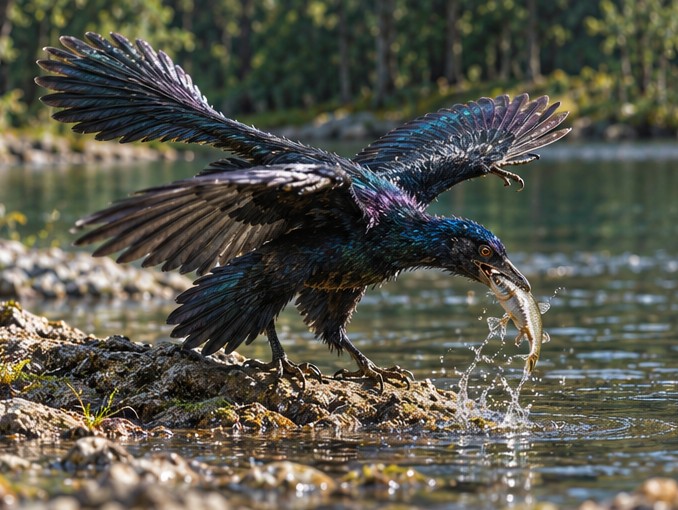
Microraptor is one of the few dinosaurs whose stomach contents we actually know. Remains of a bird (O'Connor et al. 2011, PNAS), of fish (Xing et al. 2013, Evolution) and of a whole lizard, swallowed head first (O'Connor et al. 2019, Current Biology), have been found. So it was a versatile little predator – dangerous to small animals, not to people (who didn't exist yet, of course). For Archaeopteryx we don't know the stomach contents; it had small teeth, and the foot pads of the new Chicago specimen point to a foot for walking on the ground, not for grasping prey like a bird of prey (O'Connor et al. 2025, Nature).
| Microraptor / Archaeopteryx | Today's birds of prey | |
|---|---|---|
| Mouth | Teeth | Toothless hooked beak |
| Tail | Long, bony tail (Chicago specimen: even longer than thought) | Short tail with fused tail vertebrae (pygostyle) and a fan of feathers |
| Hands | Clawed fingers; the smallest finger was free and mobile (Chicago specimen) | Fingers fused into the wing |
| Wings | Microraptor: four wings (arms + legs) | Two wings |
| Feathers | Asymmetric flight feathers – as in today's birds; Archaeopteryx had tertials that closed the gap between wing and body | Same basic design |
| Grip | Archaeopteryx: not a grasping foot | Powerful grasping feet with talons |
Keel and flight muscles: we haven't found a source of sufficient quality for a short, precise statement, so this is left out here.
Numbers are one thing – but feeling the air move as a white-tailed eagle glides past a metre above your head is something else entirely. Come to a flight demonstration and see the difference between a falcon's pointed wings and a condor's "fingers" with your own eyes. We look forward to seeing you.
– Peter Frank Wenzel, Eagle World (Ørnereservatet)